For Families · Big Feelings
When Your Child Melts Down at the Store
It happens to almost every parent. One moment you're choosing cereal, the next your child is on the floor in tears. Here's why it happens, and what actually helps.
You planned a quick trip. Maybe fifteen minutes, in and out. But somewhere between the entrance and the checkout, something shifted. Your child asked for something, didn't get it, or simply hit a wall, and now you're in the middle of the aisle, heart pounding, wondering what to do next.
First: you're not alone, and your child isn't being difficult on purpose.
Why Stores Are So Hard for Young Children
Grocery stores and shopping centres are genuinely overwhelming environments for children, especially those who are sensitive or still developing self-regulation skills. Consider what they're navigating:
- Fluorescent lights, background music, and constant movement
- Long waits with no clear end point; children have very little sense of time
- Hunger, tiredness, or sensory overload that built up before you even arrived
- Seeing things they want but can't have, with no way to understand why
A meltdown isn't a behaviour problem. It's a communication. Their nervous system has reached its limit, and they don't yet have the words or the skills to say so calmly.
In the Moment: What Actually Helps
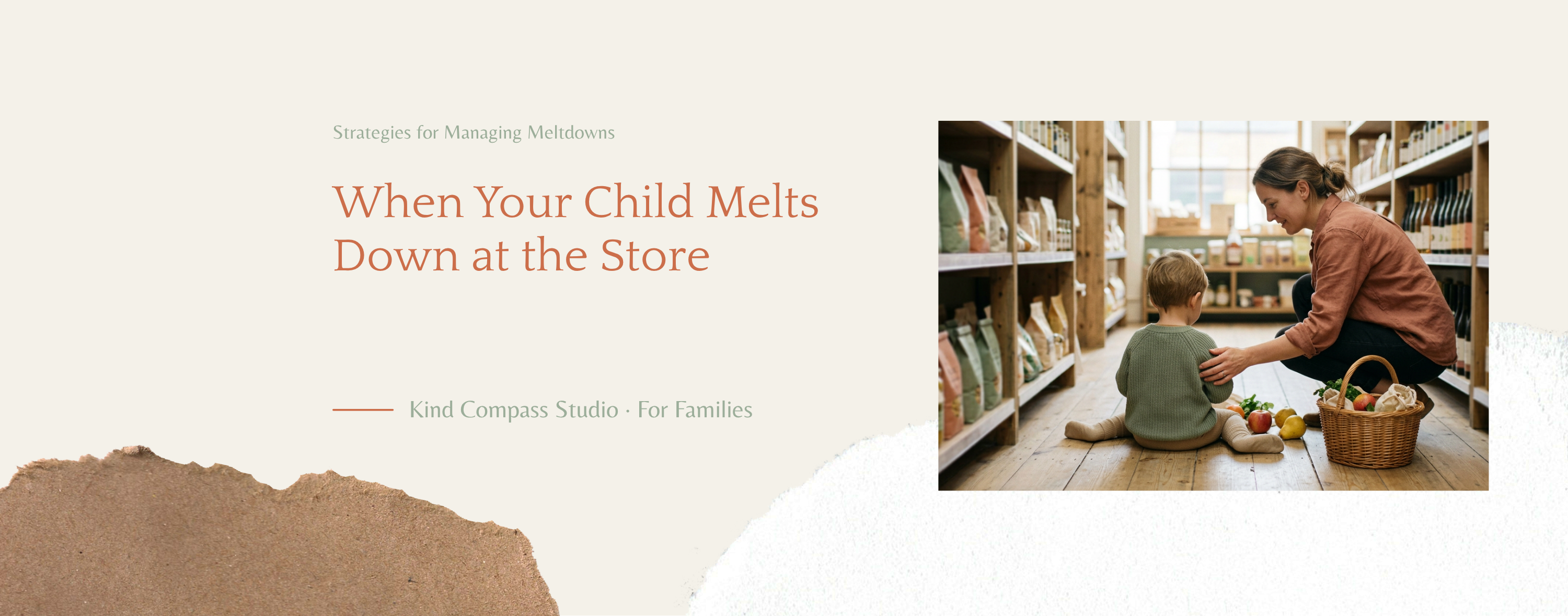
When a meltdown begins, the goal isn't to stop it quickly. It is to help your child feel safe enough to come back to calm. A few things that tend to work:
- Get low. Crouch down to their eye level rather than standing over them.
- Use fewer words. A flooded brain can't process long explanations. Try: "I'm here. I've got you."
- Avoid reasoning or bargaining in the moment. Save the conversation for later, when they're calm.
- If possible, move to a quieter spot: a corner of the shop, outside, or near a wall.
Staying calm yourself is the most powerful thing you can offer. Their nervous system will begin to co-regulate with yours.
After: The Conversation That Matters
Once your child is calm, back at home, after a snack, or the next morning, is a good time for a gentle check-in. Not to review what went wrong, but to build language around feelings:
"At the shop today, it seemed like your body got really big feelings. Do you remember what that felt like?" This kind of conversation, over time, builds the emotional vocabulary children need to eventually manage these moments themselves.
Planning Ahead
Some adjustments that can reduce the chances of a hard shop:
- Go when your child is rested and has eaten
- Keep the trip as short as possible, especially on difficult days
- Give a preview before you enter: "We're getting five things. When we're done, we go home."
- Offer a small role: let them carry something, find an item, or tick things off a list
- Acknowledge effort: "You stayed with me the whole time. That's hard work."
Kind Compass Studio creates printable social stories and visual supports for children navigating big feelings, made first for one child, then shaped for many.